Remarketing / Retargeting
Remarketing and retargeting specifically target users who have already shown interest in your offer—for higher conversion rates.
What is Remarketing / Retargeting?
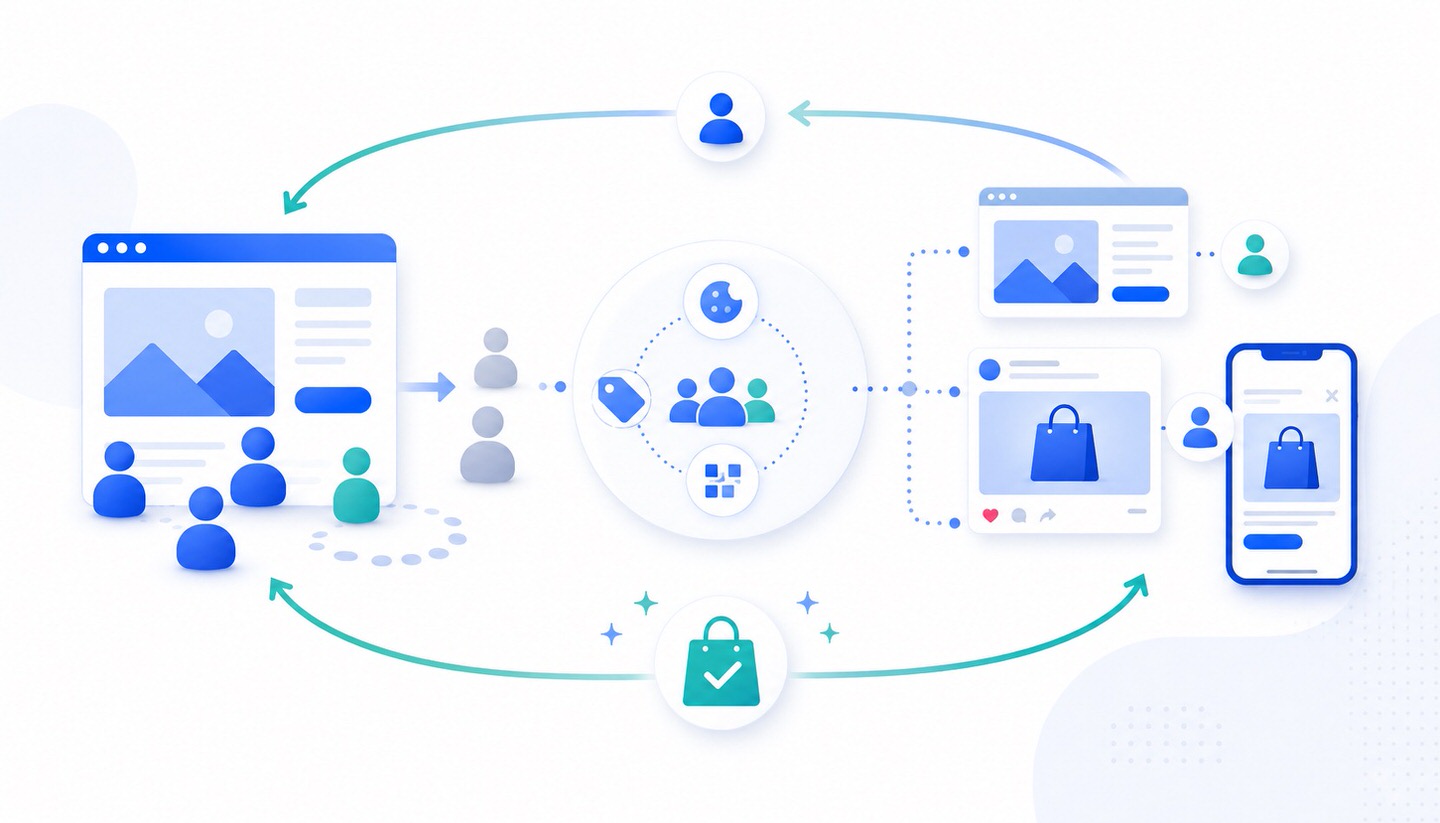
Remarketing and retargeting refer to advertising strategies that specifically target users who have already interacted with a company, such as by visiting a website, viewing a product, or abandoning a shopping cart without making a purchase. Instead of displaying ads broadly to an unknown audience, they are directed specifically at individuals who have already shown interest.
The core idea: Most users do not buy or convert on their first visit. Remarketing brings these prospects back and reminds them of the offer, often at the very moment when the purchase decision is still pending.
Is there a difference between Remarketing and Retargeting?
In practice, the two terms are mostly used synonymously and essentially mean the same thing. If any distinction is made at all, it is as follows:
- Retargeting: Traditionally refers to the re-display of ads based on browsing behaviour, usually via cookies or tracking pixels.
- Remarketing: Is often understood more broadly and also includes re-engagement via existing contact data, such as emailing existing customers.
Since the transition is fluid and Google uses the term "Remarketing" for its advertising products, both terms can be used interchangeably in everyday language.
How does Remarketing work technically?
The basis is usually a small piece of code embedded on the website, such as a tracking pixel or a remarketing tag. When a user visits the site, they are (after consent) marked and assigned to an audience list. After leaving the site, they can then be shown relevant ads on other websites, in social networks, or in search results.
A classic example: Someone views a pair of shoes in an online shop but does not buy them. Shortly afterwards, they see ads for those exact shoes on other websites. That is retargeting in action.
What forms are there?
- Standard Remarketing: Ads are shown to previous visitors on other websites and in apps.
- Dynamic Remarketing: Users are shown exactly the products they previously viewed. Particularly effective in e-commerce.
- Remarketing Lists for Search Ads (RLSA): Previous visitors see tailored ads when they search again on Google.
- Email Remarketing: Re-engagement via existing contact data, such as a reminder email for an abandoned shopping cart.
- Social Media Remarketing: Re-engagement via platforms like Meta, often based on uploaded customer lists or pixel tracking.
Why is Remarketing so effective?
- Targeted Approach: The advertising reaches people who have already shown interest, significantly increasing the likelihood of conversion.
- Better Conversion Rate: Warm leads generally convert better than completely new target groups.
- Brand Presence: Repeated visibility keeps a brand in mind and strengthens trust.
- Efficient Use of Resources: The budget is directed specifically at users with identifiable interest, rather than being spread broadly.
Data Protection: What to consider in Germany and the EU
Since remarketing is based on tracking user behaviour, it is particularly sensitive in terms of data protection. For website operators, the following applies:
- Consent Required: Remarketing tags and tracking pixels may only be loaded after active consent via a cookie consent banner.
- Transparency: The privacy policy must disclose that and how remarketing is used.
- Consequences of Cookie Deprecation: As browsers increasingly restrict third-party cookies, alternative methods such as remarketing via owned customer lists (first-party data) are gaining importance.
What to watch out for
Remarketing can also have a negative effect if overused. If users are shown the same ads too frequently, it can be perceived as intrusive and harm the brand. It is therefore advisable to limit ad frequency (frequency capping) and exclude users who have already made a purchase to avoid wasting budget on already acquired customers.
Conclusion
Remarketing and retargeting are powerful strategies for re-engaging interested users and guiding them to conversion. They address precisely where most conversions are lost: among people who have already shown interest but have not yet made a purchase. Since the method relies on tracking, compliant implementation in Germany and the EU is particularly important. When properly dosed and consented to, remarketing is one of the most efficient tools in performance marketing.