Viral Marketing
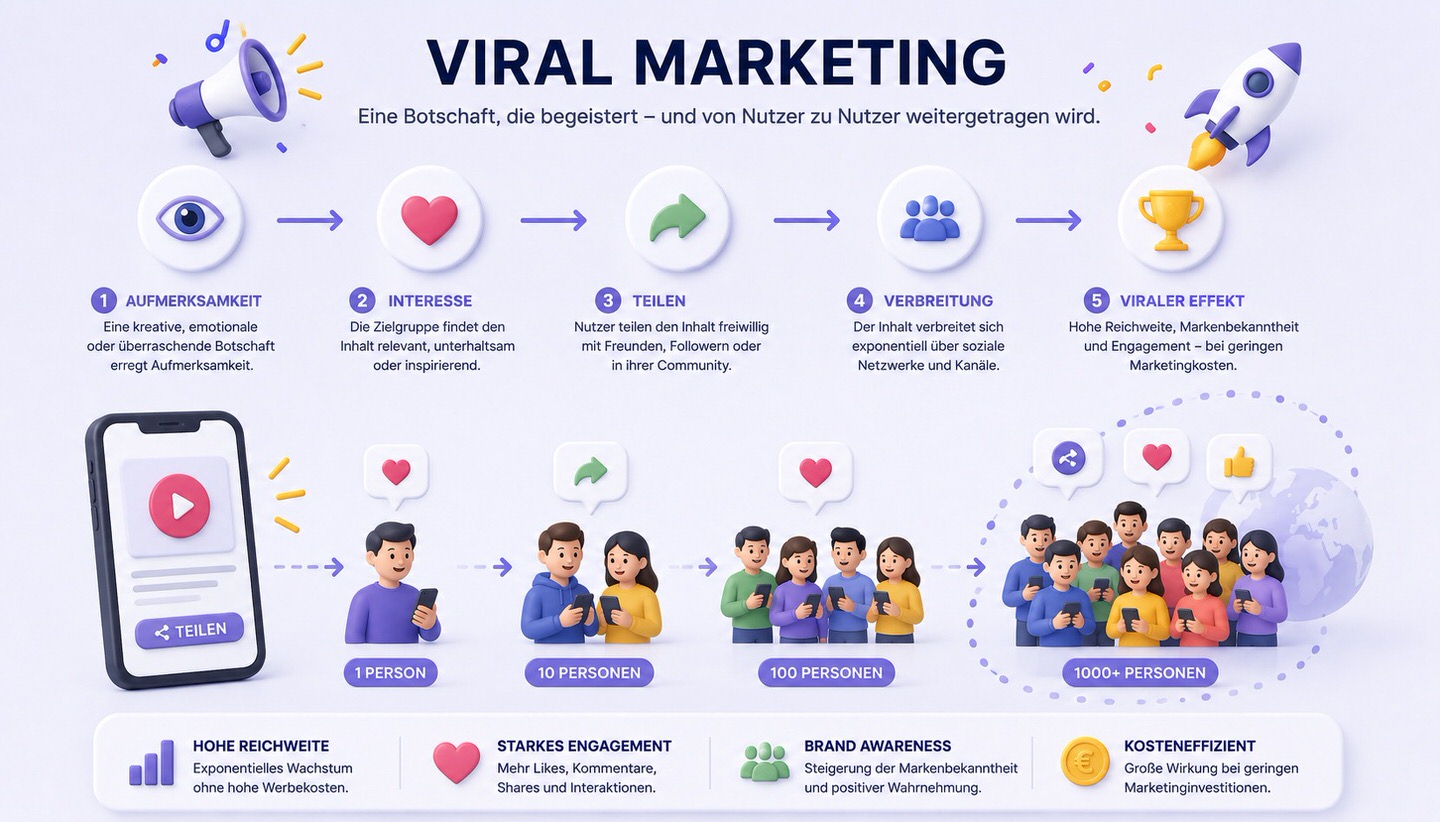
Viral marketing spreads content through users themselves - like a virus - and achieves enormous reach on a small budget.
What is Viral Marketing?
Viral marketing is a strategy in which content is designed to spread as quickly and independently as possible via users themselves, similar to how a virus spreads. Hence the name. Instead of buying reach at a high cost, viral marketing relies on people voluntarily sharing content because it excites, touches, surprises, or entertains them. Ideally, reach multiplies on its own without the company having to pay for each further distribution.
The big promise of viral marketing is enormous reach with a comparatively small advertising budget. At the same time, it is one of the most unpredictable forms of marketing, as whether content actually goes viral cannot be guaranteed.
How Does Viral Marketing Work?
The core is a snowball effect: A piece of content is shared by one person, their contacts share it further, their contacts do the same, and so on. In a short time, a very large reach can emerge from a small initial group. Crucial for this is a high "sharing incentive," meaning a reason why people actively want to pass on the content.
Social networks are the most important distribution channel here, as sharing is possible with just one click, and content can quickly reach a large audience.
What Makes Content Viral?
Viral content usually triggers a strong emotional reaction. Typical triggers include:
- Emotions: Content that makes people laugh, touches them, surprises, or excites them is shared particularly often.
- Added value: Useful or educational content that people like to share with others.
- Identification: Content in which the target group sees themselves reflected or that expresses their opinion.
- Timeliness and relevance: Reference to current topics, trends, or societal discussions.
- Originality: Something new, unusual, or unexpected that stands out.
A common explanatory approach suggests that content with high emotional intensity is shared most frequently, regardless of whether the emotion is positive (joy, amazement) or activating negative (outrage).
Opportunities and Risks
Opportunities:
- High reach with a low budget: A successful viral piece of content reaches many times the paid reach.
- Rapid boost in awareness: A brand can gain enormous awareness in a short time.
- Credibility: Content spread through personal recommendations appears more authentic than traditional advertising.
Risks:
- Unpredictability: Virality cannot be forced. Even well-thought-out campaigns can remain ineffective.
- Loss of control: Once content is spread, it can no longer be retrieved or controlled.
- Negative virality: Undesirable or critical content can also spread rapidly and harm a brand (often referred to as a "shitstorm").
- Short-lived: Viral attention is often a short-lived flash in the pan without lasting impact if not used wisely.
Viral Marketing and SEO
Although virality primarily occurs on social media, it can indirectly have a positive effect on SEO. Viral content generates high attention, which often leads to other websites and blogs reporting on it and linking to it. This creates valuable backlinks (earned media) that strengthen a website's authority. Additionally, the increased awareness often leads to a rise in direct and brand-related search queries. Viral marketing and SEO are therefore not separate worlds but can complement each other effectively.
What to Pay Attention To
- Fit the brand: Viral content should align with the brand and its values; otherwise, while attention may be gained, the right message may not stick.
- Don’t rely solely on virality: Virality should be a welcome side effect, not the sole pillar of a marketing strategy.
- Leverage the attention: Those who go viral should be prepared to capture the gained attention, for example, through a well-designed website or newsletter, to turn one-time visitors into long-term contacts.
- Maintain authenticity: Forced or dishonest attempts at virality are often quickly seen through and can backfire.
Conclusion
Viral marketing aims to create content that spreads rapidly through users themselves, promising great reach with a small budget. The key lies in strong emotions, genuine added value, and originality that motivate people to share. At the same time, virality is unpredictable and cannot be forced, which is why it should not be a reliable foundation but rather a valuable side effect of a strategy. Those who wisely capture viral attention and convert it into sustainable contacts and backlinks can create real and lasting value, far beyond the short-lived flash in the pan.