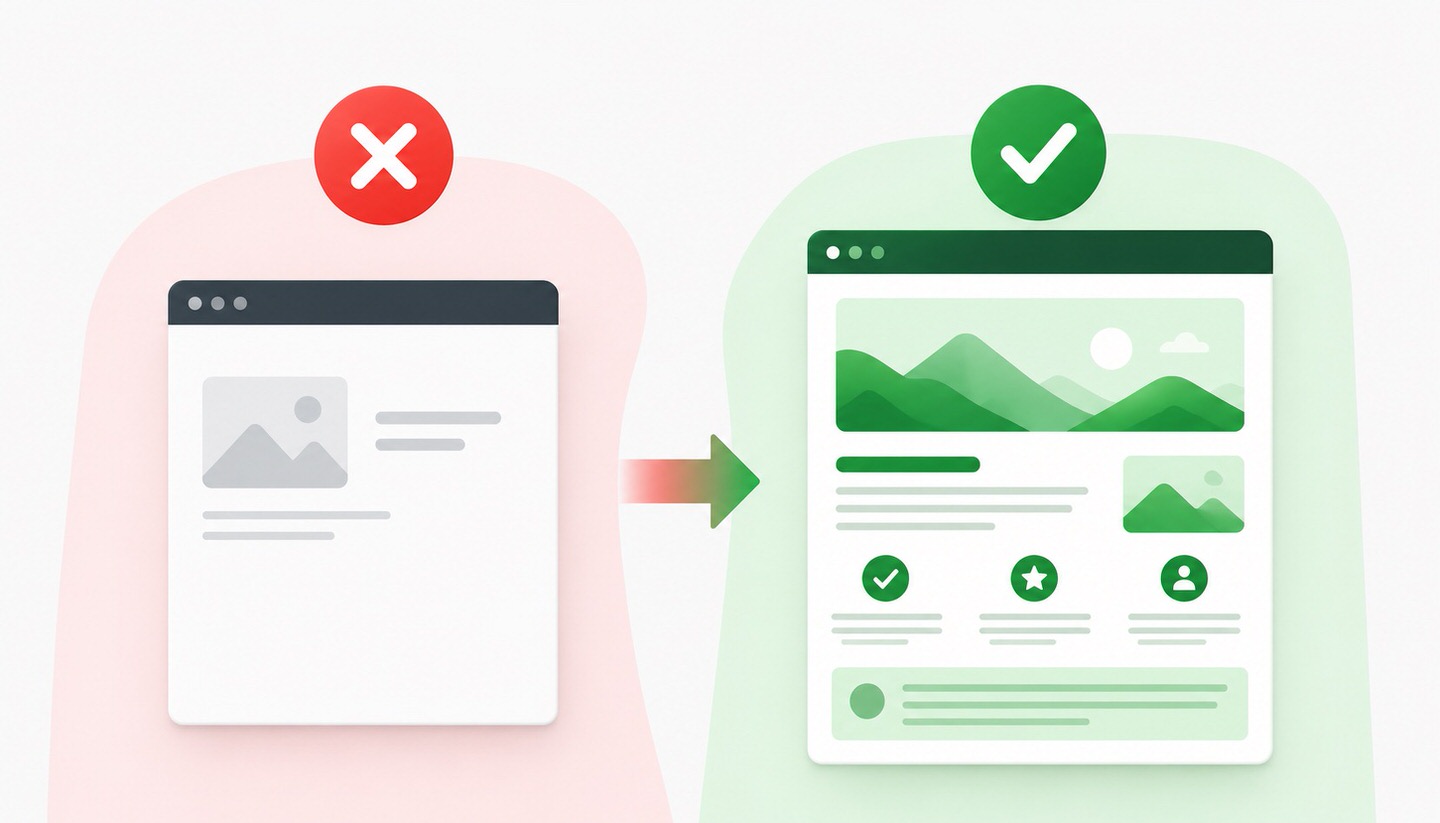
Thin Content
Thin content provides no added value and harms your SEO. Learn how to identify and optimize thin content to improve rankings.
What is Thin Content?
Thin Content (in German "dünne Inhalte" or "thin content") refers to pages that offer users little or no real added value. These are contents that only superficially cover a topic, do not fulfil the search intent, or provide no independent benefit. From Google's perspective, such pages are a quality issue because they do not help searchers and dilute the search results.
It is important to clarify right from the start something that is often misunderstood: Thin Content has nothing to do with the sheer length of the text. A short page can be very valuable if it precisely answers a question, while a long page full of filler text can still be "thin." What matters is not the quantity, but the value.
What forms of Thin Content exist?
Thin Content appears in various forms. Typical examples include:
- Low-content pages: Pages with very little substance that offer hardly any information or benefit.
- Duplicate content: Identical or very similar content that does not add any unique value (Duplicate Content).
- Automatically generated content: Machine-generated or mass-produced texts without real added value.
- Pure affiliate pages: Pages that only contain third-party product descriptions and affiliate links without any personal assessment or experience.
- Copied content: Texts taken from other websites without any original processing.
- Pure keyword pages: Pages created solely to rank for a keyword without actually serving the users.
Why is Thin Content a problem?
- Poor user experience: Users who land on a low-content page are dissatisfied and quickly bounce off.
- Negative quality assessment: Google evaluates websites holistically. Many thin pages can negatively impact the overall impression of the website and drag down even good pages.
- Wasted crawl budget: Search engines spend time crawling worthless pages instead of focusing on the important ones.
- Weak rankings: Thin content does not fulfil the search intent and therefore has little chance of achieving good rankings.
Thin Content and Google's Quality Systems
Google has long targeted low-quality content. Historically, this began with the so-called Panda Update, which specifically devalued thin and low-quality pages. Today, the fight against Thin Content is a fixed part of quality assessment, particularly through the Helpful Content System, which favours content written for people rather than search engines. The underlying principle is that content should provide real value to users and demonstrate first-hand expertise and trustworthiness, thus contributing to the E-E-A-T concept.
Thin Content in the Age of AI
A highly relevant aspect today: With AI, it is now effortless to generate vast amounts of content. This has made the issue of Thin Content even more important. Google evaluates mass-produced, superficial content without real added value as low-quality, regardless of whether it was created by humans or AI. The decisive factor is solely the benefit to the reader. Unedited, mass-produced AI texts are thus a classic example of modern Thin Content and pose a significant risk to visibility.
How to identify Thin Content on your own site?
- Pages with little traffic and engagement: Pages that receive few visits or have high bounce rates are candidates for review.
- Very short pages without a clear purpose: Pages that offer little substance and do not address a real need.
- Duplicate or very similar pages: Content that overlaps significantly.
- Old, neglected content: Pages that have not been maintained for a long time and are outdated.
How to fix Thin Content?
A proven decision-making framework has been established for thin content, which can be roughly summarised as "improve, consolidate, or remove":
- Improve: Enhance valuable but thin pages by expanding them with real information, personal experience, and a clear answer to the search intent.
- Consolidate: Combine several similar, thin pages into a single, comprehensive, and high-quality page and redirect the old ones to it.
- Remove (Prune): Delete pages without any value and no prospect of improvement or exclude them from indexing using noindex.
The goal is always to increase the overall quality of the website by eliminating worthless pages and strengthening valuable ones.
Conclusion
Thin Content refers to low-value content that offers users little or no real added value, regardless of its length. It worsens the user experience, can negatively impact the assessment of the entire website, and has little chance of achieving good rankings. Google actively targets such content through quality systems like the Helpful Content System, and particularly mass-produced AI content without substance clearly falls into this category today. The correct approach is to identify thin content and consistently improve, consolidate, or remove it. This increases the overall quality of the website, benefiting both users and rankings. The most sustainable protection against Thin Content remains simple: write for people and provide real added value.