Zero-Click Search
Zero-click searches provide answers directly in search results—without requiring a click to a website. Learn what this means for your SEO.
What is a Zero-Click Search?
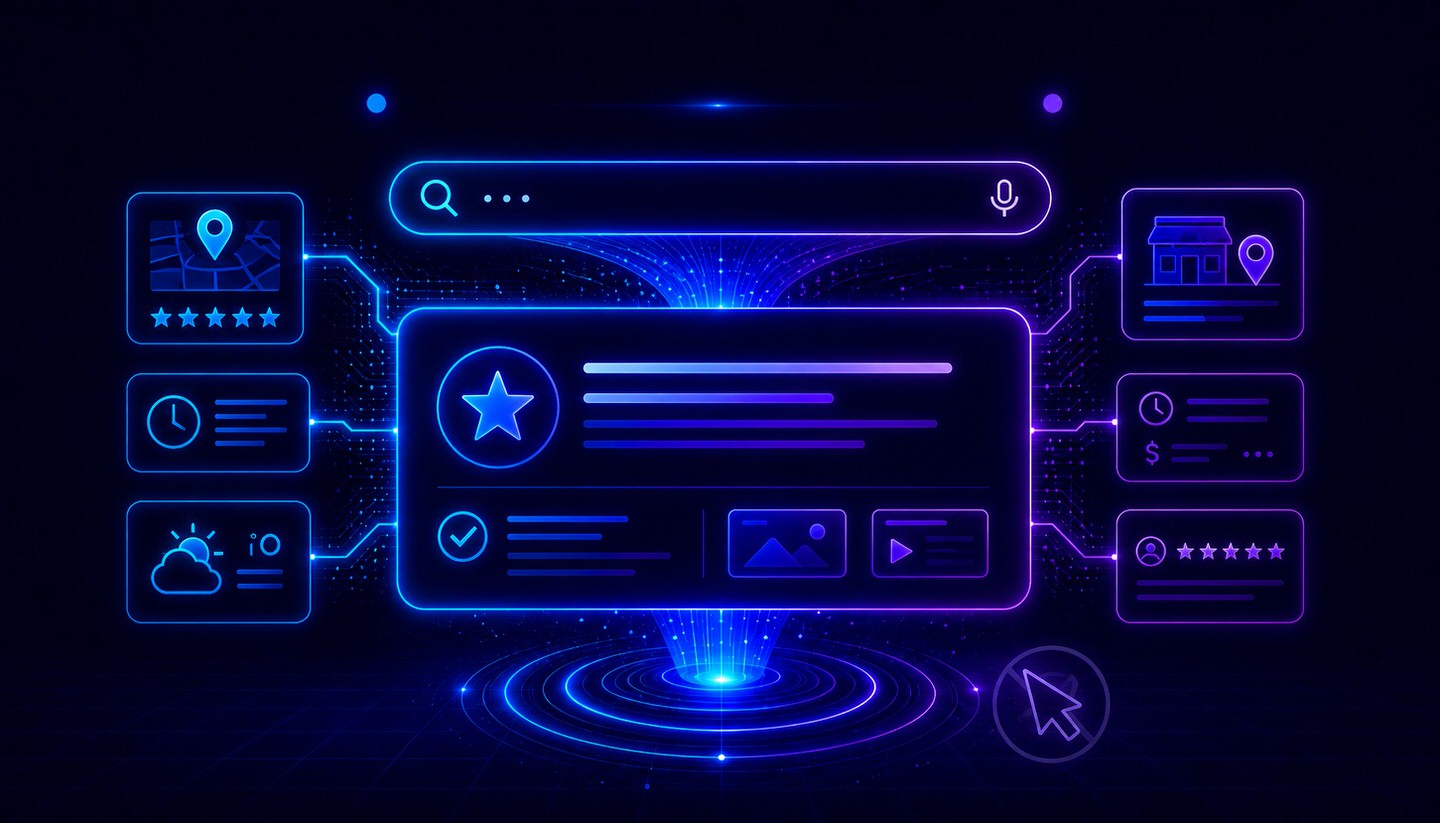
A Zero-Click Search is a search query where the user receives their answer directly on the search results page without clicking on a result or visiting a website. The search engine answers the question immediately itself, for example via an AI summary, a featured snippet, or an info box.
A simple example: Someone who searches for "15 USD in Euros" or "Weather Berlin tomorrow" gets the answer displayed immediately and has no reason to open a website. The term was coined in 2019 by a study by Rand Fishkin (SparkToro), which showed that even back then, around half of all Google searches ended without a click.
What Causes Zero-Click Searches?
Several elements on the search results page answer queries directly and thus lead to zero-click searches:
- AI Overviews: The AI-generated summaries by Google, which have been appearing above the classic results for more and more queries since 2024. They are now the strongest driver of Zero-Click Searches.
- Featured Snippets: Highlighted text excerpts that answer a question directly at the top of the results.
- Knowledge Panels: Info boxes about companies, people, or places, usually on the right-hand side.
- Direct Answer Boxes: Calculators, converters, definitions, weather information, or opening hours.
- People Also Ask: Expandable follow-up questions that provide further answers directly on the page.
How Widespread is the Phenomenon?
Zero-Click Searches are no longer a niche topic but the majority of all searches. Recent analyses based on SparkToro and Datos data suggest that around 60 to 65 percent of all Google searches end without a click on an external result. The proportion is even higher on mobile devices than on desktop.
Particularly revealing is the comparison between searches with and without an AI summary: Queries where an AI Overview appears end without a click about 83 percent of the time, whereas searches without an AI Overview result in around 60 percent zero-click searches. AI search thus significantly intensifies the effect.
Which Searches Are Affected and Which Are Not?
The impact does not affect all content equally. The decisive factor is the search intent:
- Strongly affected: Informational searches with simple, clearly answerable questions (definitions, numbers, short facts). These can be easily answered directly by AI summaries and snippets.
- Hardly affected: Transactional searches (purchase intent), searches for a specific brand, and local searches where users access a map, opening hours, or a website. Here, the click remains necessary.
Interesting: Studies show that the clicks that still occur despite an AI Overview are often of higher quality. These users have already read the summary and are specifically looking for more in-depth information.
What Does This Mean for Website Operators?
The central consequence: Visibility and traffic are no longer the same. A brand can appear prominently in search results and still receive no clicks. This results in new strategies:
- Focus on visibility rather than just clicks: Even a mention in an AI Overview or a snippet strengthens brand awareness, even without a visit to the page.
- Optimise content for Featured Snippets: Clear, direct answers to specific questions increase the chance of appearing as a highlighted result.
- Concentrate on click-worthy search intents: Transactional, local, and brand-related content retain their traffic value.
- Take GEO seriously: As AI answer systems increasingly provide the answers, it becomes more important to appear as a cited source in these responses (Generative Engine Optimisation).
- Offer depth that a summary cannot provide: Comprehensive guides, proprietary data, tools, or expert opinions give users a real reason to click.
Conclusion
Zero-Click Searches have become the new normal in online search and will continue to increase with AI-powered search. For website operators, this means a shift in thinking: Focusing solely on click numbers is no longer sufficient. Instead, the goal is to be visible where the answers are generated, to specifically target click-worthy search intents, and to create content that goes beyond a quick summary. Those who understand this shift can adapt their strategy early on instead of chasing lost traffic.