XSS (Cross-Site Scripting)
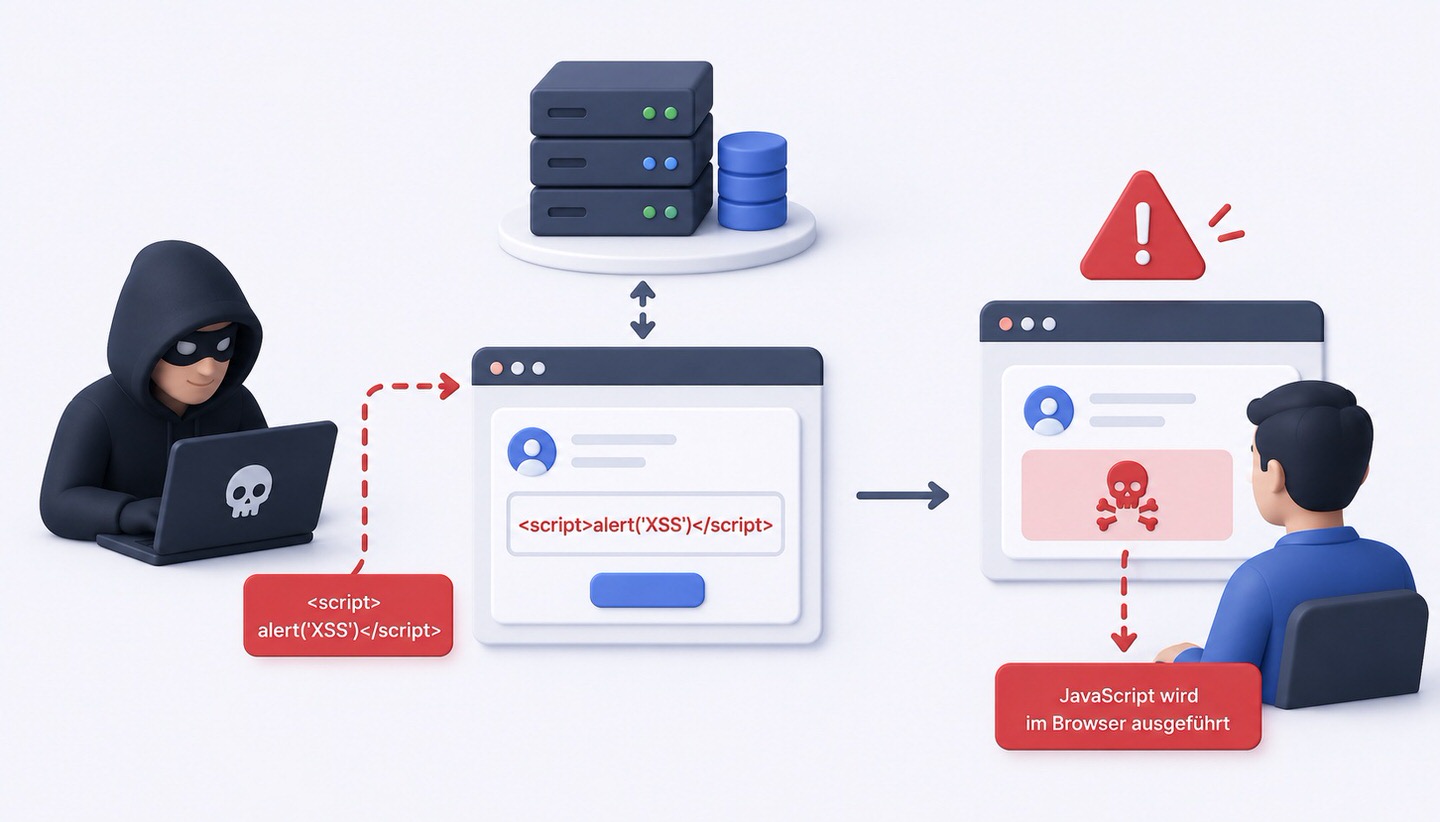
XSS (Cross-Site Scripting) is a security vulnerability where attackers inject malicious code into websites to steal user data or manipulate pages.
What is Cross-Site Scripting (XSS)?
Cross-Site Scripting, or XSS for short, is one of the most well-known security vulnerabilities in websites. It allows an attacker to inject malicious code (usually JavaScript) into a trusted website. This code is then executed in the visitors' browsers without them noticing. Since the code originates from a site that users trust, it can cause significant damage.
For website operators, XSS is an important topic because it affects not only visitors but also the reputation and security of their own website. XSS is one of the most common vulnerabilities on the web and is regularly listed in the well-known OWASP Top 10 security list.
How does an XSS vulnerability occur?
The cause is almost always the same: A website accepts user input and outputs it without validation. Anywhere visitors can enter data that is subsequently displayed can become a vulnerability, such as in:
- Comment fields and guestbooks
- Search fields that display the search term on the results page
- Contact and registration forms
- Profile or forum entries
Simply put: If a website treats user input as part of the webpage without validation, an attacker can embed executable code instead of harmless text.
The types of XSS
There are typically three basic forms of XSS, which differ in how the malicious code reaches the victim:
- Stored XSS: The malicious code is permanently stored on the website, such as in a comment, and is delivered to all visitors upon each request. This is the most dangerous variant because it affects many users at once.
- Reflected XSS: The code is part of a manipulated link and is only executed when a user clicks on that specific link. Such links are often spread via email or other channels.
- DOM-based XSS: The vulnerability arises in the browser itself due to faulty JavaScript on the page, without the server being directly involved.
What damage can XSS cause?
Since the injected code runs in the visitor's browser with the privileges of the trusted site, the potential consequences are serious:
- Theft of session data: Attackers can intercept login credentials or session information and thus take over accounts.
- Manipulation of the page: Content can be altered, or fake input fields can be displayed to capture data.
- Redirection to malicious sites: Visitors can be redirected to dangerous websites without noticing.
- Loss of trust and reputation: If a website is abused for such attacks, it damages its reputation and can lead to warnings from Google.
How to protect your website from XSS?
Protection against XSS is well-established and based on a few core principles. The most important protective measures are:
- Validate input (Input Validation): All data coming from users should be checked and restricted to the expected format.
- Encode output (Output Encoding): The most important measure. User input should be transformed during output so that the browser interprets it as plain text and not as executable code.
- Content Security Policy (CSP): A security policy in the HTTP header that specifies which scripts are allowed to run. It can significantly limit the impact of a vulnerability.
- Keep software up to date: Regularly update content management systems like WordPress and their plugins, as security vulnerabilities are continuously being fixed.
- Use security plugins and frameworks: Modern frameworks and established CMS often come with built-in protection mechanisms that prevent such vulnerabilities.
Especially important for CMS and WordPress users
Those using a common system like WordPress are not automatically secure, but they are not defenseless either. The biggest risks usually arise from outdated or insecure plugins. Therefore, it is important to: only install extensions from trusted sources, remove unnecessary plugins, and keep everything consistently up to date. For forms and comment functions, established and well-maintained solutions that already consider XSS protection should be used.
Conclusion
Cross-Site Scripting (XSS) is a widespread security vulnerability in which attackers inject malicious code into a trusted website, which is then executed in the visitors' browsers. The consequences range from the theft of login credentials to reputational damage for the affected website. The good news: Protection is well-implementable with proven principles, primarily clean output encoding, input validation, and consistent updating of the software used. Those who follow these measures reliably protect both their visitors and their own website.