URL
A URL is the unique address of a webpage on the internet and a key factor for search engine optimization (SEO).
What is a URL?
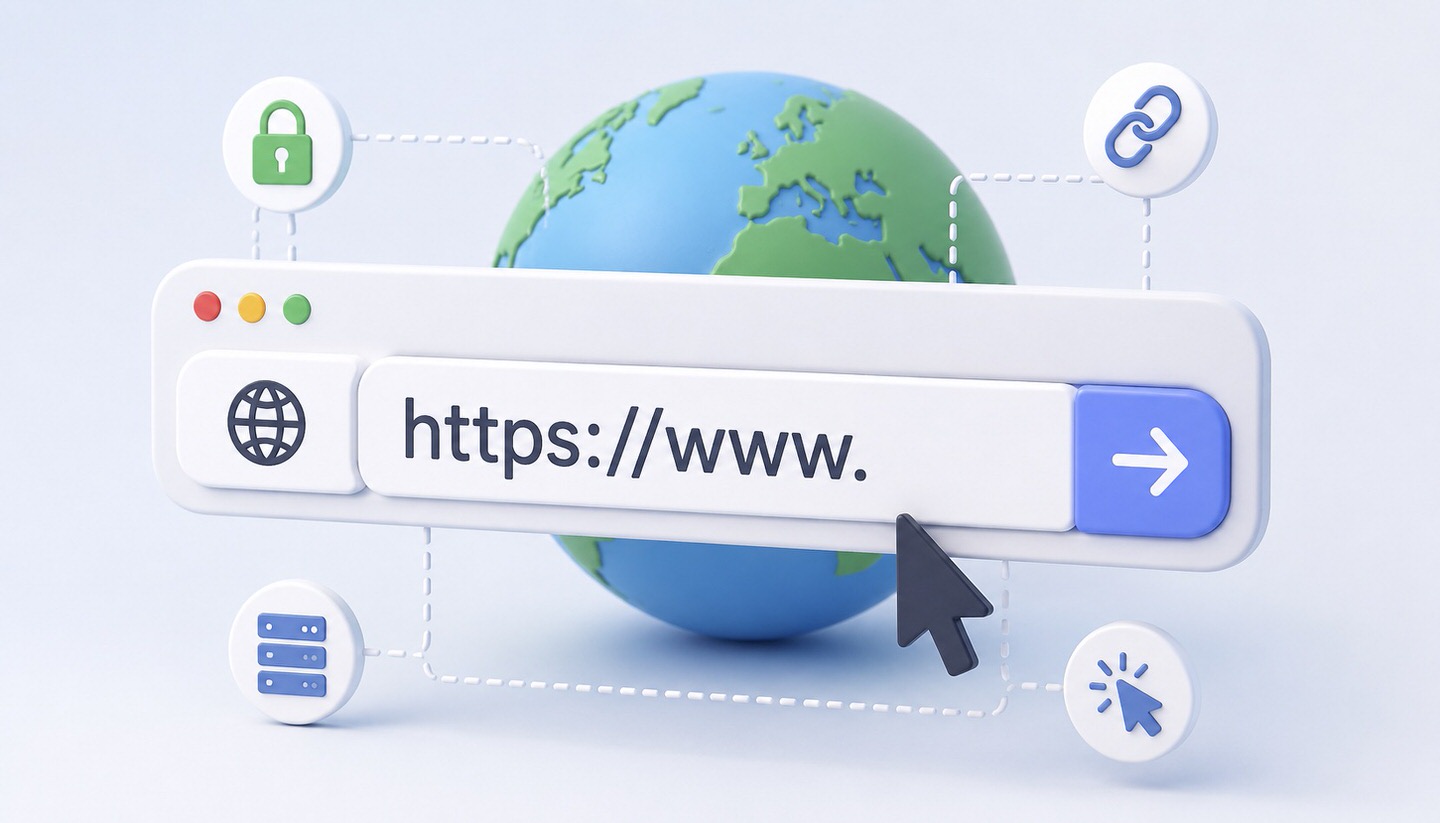
URL stands for Uniform Resource Locator and refers to the unique address under which a resource on the internet can be accessed, such as a webpage, an image, or a file. Simply put, the URL is the "web address" that you enter into the browser's address bar to access a specific page. Every single page on the web has its own, unique URL.
You can think of the URL like a postal address: Just as an address consists of country, city, street, and house number, a URL is also made up of several components that together specify a precise location on the internet.
The Structure of a URL
A typical URL consists of several parts. Using the example of https://www.example.de/blog/seo-tips:
- Protocol (https://): Specifies how data is transmitted. "https" stands for the encrypted, secure variant and is the standard today.
- Subdomain (www): An optional prefix, often "www".
- Domain (example.de): The actual name of the website, consisting of the name and the extension (Top-Level Domain, here ".de").
- Path (/blog/seo-tips): Indicates which specific page within the website is meant.
Additionally, a URL can contain parameters, such as ?id=123, which are often used for filters, sorting, or tracking.
Why Are URLs Important for SEO?
The URL is not just a technical address but also a factor in search engine optimization. A well-thought-out URL offers several advantages:
- Understandability for Users: A descriptive URL like
/blog/seo-tipsimmediately reveals what the page is about and builds trust. - Classification by Search Engines: Google also uses the URL as one of many indicators of a page's content. A relevant keyword in the URL can be supportive.
- Better Clickability: Clear URLs also appear in search results and seem more trustworthy than cryptic strings of characters.
- Shareability: Descriptive URLs are easier to remember, share, and link to.
What Makes a Good, SEO-Friendly URL?
- Short and Concise: As brief as possible, without unnecessary components.
- Descriptive and Understandable: The content of the page should be evident from the URL, such as
/womens-shoes/sneakersinstead of/product?id=4815. - Contains Relevant Keywords: The main topic of the page should naturally appear in the URL.
- Hyphens for Word Separation: Individual words are separated by hyphens, not underscores or written together.
- Lowercase: URLs should be consistently lowercase, as uppercase and lowercase letters can create different addresses on some servers.
- No Special Characters or Umlauts: These can cause display issues. Instead of "ü", use "ue".
Be Cautious When Changing URLs
An important practical note: A URL that has already been published and indexed should not be changed without good reason. If a URL changes, the old address is considered no longer existent. Without countermeasures, this leads to an error page (404) and the loss of established rankings and backlinks. If a change is nevertheless necessary, for example as part of a relaunch, the old URL must be redirected to the new one using a 301 redirect to ensure that visitors and search engines are smoothly redirected and visibility is maintained.
Conclusion
The URL is the unique address of a resource on the internet and consists of several components such as protocol, domain, and path. Beyond its technical function, it is a relevant SEO factor: Short, descriptive, and well-structured URLs help both users and search engines to understand the content of a page and appear more trustworthy. It is important to design URLs thoughtfully from the start and to change them later only with the necessary care and appropriate redirects. A clean URL structure is thus a small but worthwhile building block of a good website.