Retention Rate
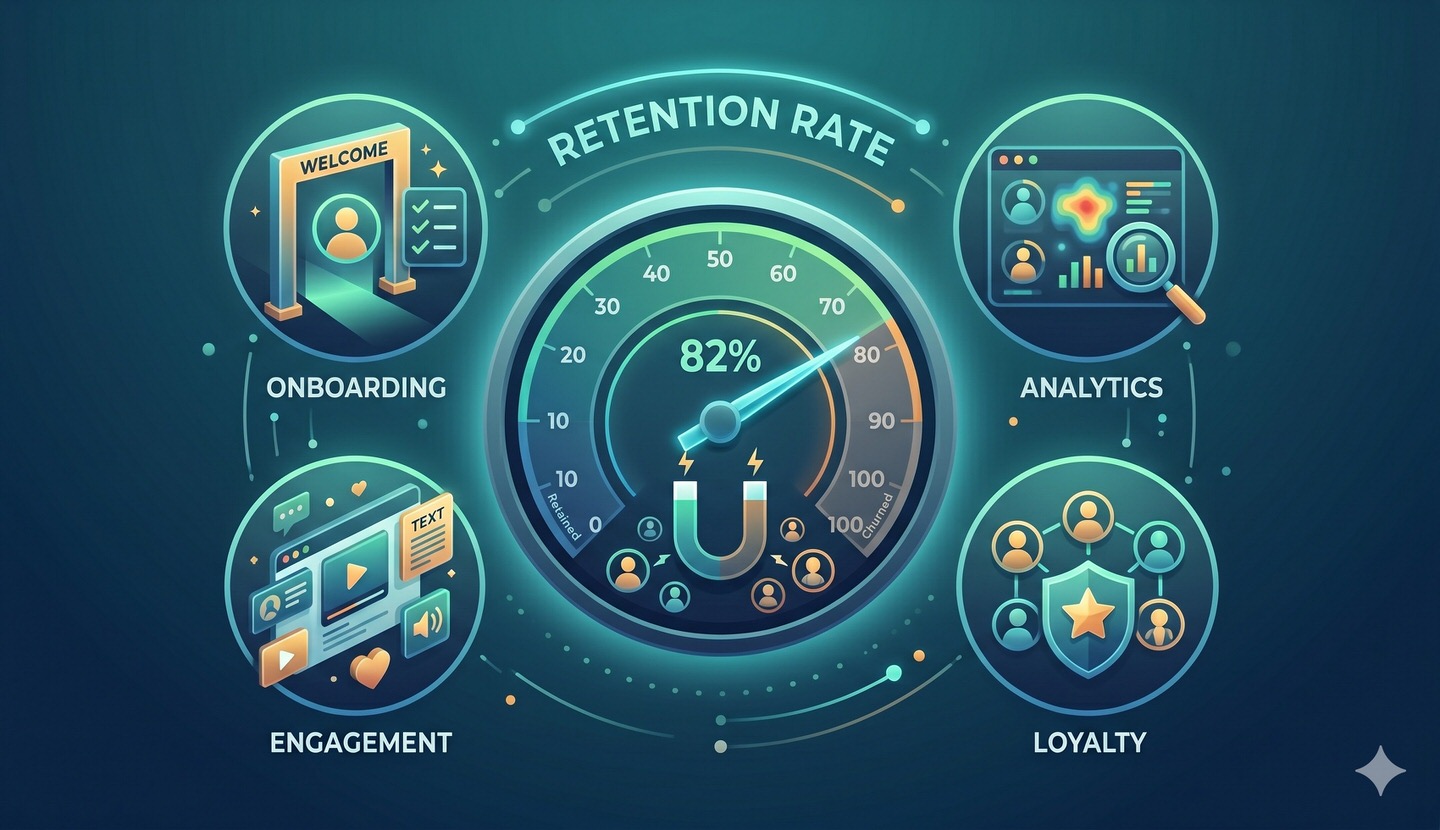
The retention rate measures how many customers a company retains over a specific period - a key indicator of loyalty and success.
What is the Retention Rate?
The Retention Rate (known in German as Bindungsrate or Kundenbindungsrate) indicates the percentage of customers or users that remain over a specific period. It measures how well a company succeeds in retaining existing customers instead of losing them. A high Retention Rate is a strong sign of satisfaction, loyalty, and a well-functioning offering.
In online marketing, this metric is particularly valuable because it shifts the focus to existing customers. Retaining an existing customer is generally significantly more cost-effective than acquiring a new one. The Retention Rate is therefore a key indicator of sustainable, profitable growth.
How is the Retention Rate calculated?
The calculation is made for a defined period and only considers customers who were already present at the beginning. Newly acquired customers are excluded. The formula is:
Retention Rate = ((Customers at the end minus new customers in the period) / Customers at the start) x 100
An example: A company starts the month with 200 customers, gains 40 new ones, and has 210 customers at the end of the month. The calculation is: (210 minus 40) divided by 200, multiplied by 100. This results in a Retention Rate of 85%.
Retention Rate and Churn Rate: two sides of the same coin
Closely related to the Retention Rate is the Churn Rate (attrition rate), which measures the opposite: the proportion of customers lost during the observed period. Both values add up to 100%. If the Retention Rate is 85%, the Churn Rate is consequently 15%. While the Retention Rate focuses on retained customers, the Churn Rate highlights losses. Both metrics are often considered together.
Why is the Retention Rate so important?
- Cost efficiency: Retaining existing customers is usually more cost-effective than acquiring new ones, which often incurs high advertising costs.
- Higher customer value: Loyal customers tend to buy more frequently and in larger quantities, increasing the Customer Lifetime Value.
- Stable growth: A company that loses many customers must first replace them before it can grow. A high Retention Rate creates a solid foundation.
- Indication of quality: A high retention rate shows that the product, service, and customer experience are convincing.
In which areas is the Retention Rate used?
The term is applied slightly differently depending on the business model:
- E-commerce: How many customers make repeat purchases?
- Subscription and SaaS models: How many subscribers renew instead of cancelling? Here, the Retention Rate is one of the most important metrics overall.
- Apps and websites: How many users return after their first visit (User Retention)?
- Newsletters and communities: How many subscribers or members remain active?
How can the Retention Rate be improved?
- Provide good service: Fast, friendly support fosters long-term customer loyalty.
- Create added value: Regular, useful content or offers keep customers engaged, for example through a good newsletter.
- Personalisation: Addressing individual customer needs increases retention.
- Take feedback seriously: Metrics like the Net Promoter Score help identify dissatisfaction early and take countermeasures.
- Analyse churn: Understand why customers leave to address the causes effectively.
Conclusion
The Retention Rate measures how well a company retains its customers and is therefore a key indicator of satisfaction, loyalty, and sustainable growth. Together with its counterpart, the Churn Rate, it provides a clear picture of whether a business model is viable in the long term. Since customer retention is generally more cost-effective than acquiring new customers, it is worthwhile to continuously monitor the Retention Rate and improve it through good service, genuine added value, and addressing customer needs.