Pillar Page
Pillar Pages are comprehensive topic pages that cover a subject in depth and optimize SEO and user guidance through cluster content.
What is a Pillar Page?
A Pillar Page (known in German as "Säulenseite" or "Themenseite") is a comprehensive webpage that broadly and fundamentally covers a central topic, serving as the main hub for that subject area. The name "Pillar" highlights its supporting role: it forms the foundation around which more specific content is grouped. A Pillar Page provides a broad overview of a topic and refers to in-depth individual pages for details.
The Pillar Page is the core of a modern content strategy known as the topic cluster model. Instead of creating individual, unconnected articles, content is organised around a central topic in a clear, interconnected structure. This helps both users with orientation and search engines in understanding the thematic expertise of a website.
The Topic Cluster Model: Pillar Page and Cluster Content
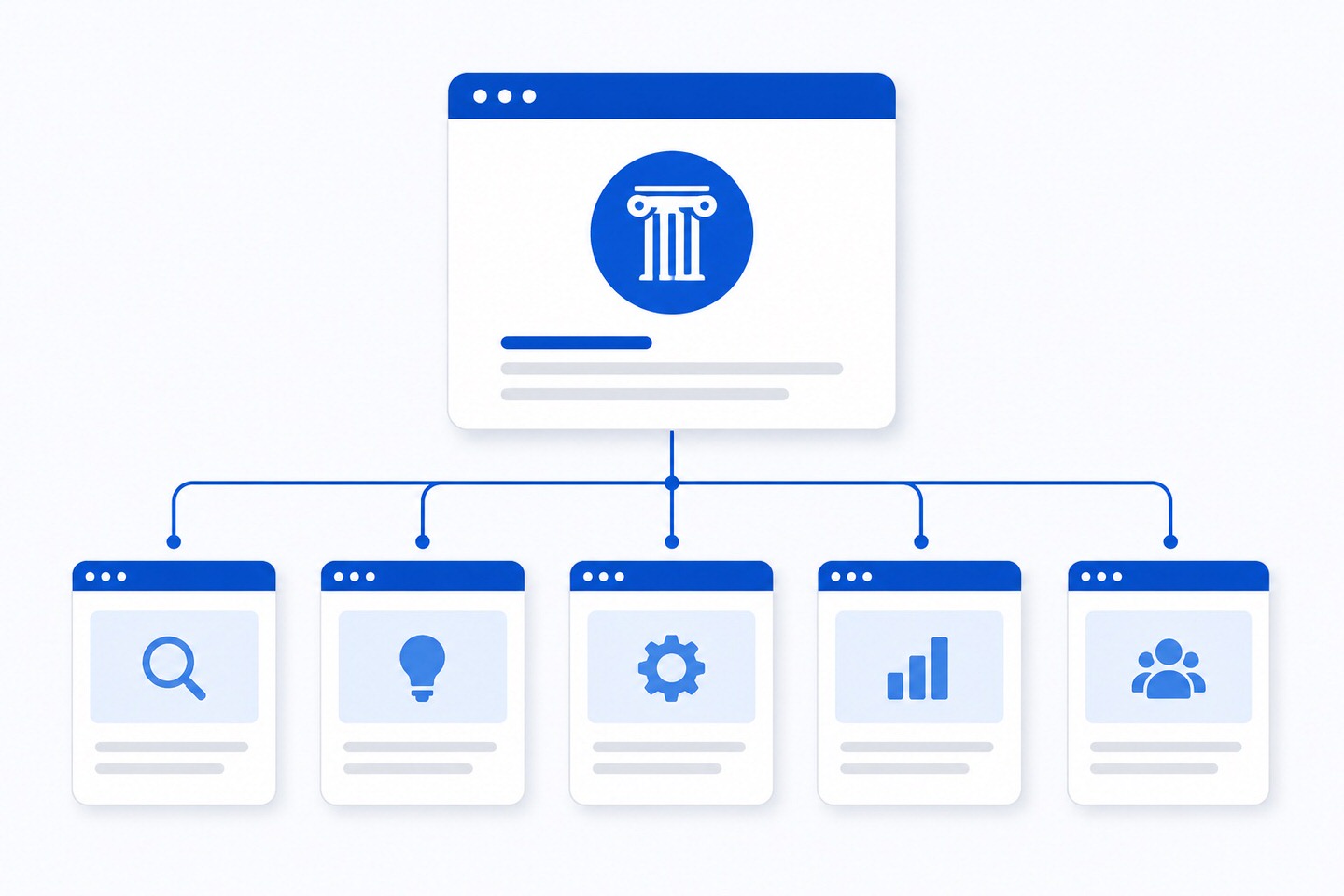
The concept consists of two interacting components, often described as the "Hub-and-Spoke" model:
- Pillar Page (the hub): The central page that comprehensively but overview-like covers a broad main topic. It usually targets a broad, general search term.
- Cluster Content (the spokes): Multiple detailed individual pages, each covering a specific subtopic of the main theme in depth. They usually target specific long-tail keywords.
The crucial aspect is the linking: The Pillar Page links to the individual cluster pages, and each cluster page links back to the Pillar Page. This creates a tightly interconnected, thematically coherent structure.
A Clear Example
Suppose a website wants to cover the topic "Search Engine Optimisation":
- The Pillar Page is a comprehensive overview article titled "SEO: The Ultimate Guide," which touches on all key areas.
- The Cluster Pages delve into individual aspects in detail, such as "Keyword Research," "Link Building," "Technical SEO," or "On-Page Optimisation."
- The Pillar Page links to all these cluster pages, and each of these pages refers back to the ultimate guide.
Why Are Pillar Pages Valuable for SEO?
- Building Topical Authority: By covering a topic comprehensively and in an interconnected way, you signal to search engines that you are a competent authority in this field (Topical Authority). This directly supports the E-E-A-T concept.
- Strong Internal Linking: The clear linking structure helps search engines recognise the connections and distributes link equity effectively within the topic.
- Covering Broad and Specific Search Queries: The Pillar Page serves general searches, while the cluster pages address many specific long-tail queries.
- Better User Orientation: Visitors find both the overview and in-depth details, making it easier for them to navigate the topic.
The Connection to Modern, Semantic Search
The topic cluster model fits particularly well with how modern search engines operate. Thanks to technologies like BERT and Natural Language Processing (NLP), they no longer just understand individual keywords but entire topics and their interconnections. A website that covers a topic comprehensively and in a structured way aligns perfectly with what search engines aim to recognise and reward. This is also advantageous for AI-powered search: clearly structured, comprehensive, and trustworthy content is more likely to be used as a source.
How to Create a Pillar Page?
- Define the Central Topic: Choose an important and sufficiently broad topic for your target audience.
- Identify Subtopics: Determine the relevant subtopics that could serve as cluster pages.
- Create the Pillar Page: Write a comprehensive overview that broadly covers the topic and refers to the details.
- Create Cluster Content: Develop an in-depth page for each subtopic.
- Link Consistently: Connect the Pillar Page and cluster pages meaningfully with each other.
Conclusion
A Pillar Page is a comprehensive, central topic page that broadly covers a main subject and serves as the foundation of a topic cluster. Together with the in-depth cluster content and mutual internal linking, it forms a clearly structured, thematically interconnected unit. This model strengthens a website’s topical authority, improves internal linking, and covers both broad and specific search queries. Since modern search engines understand topics and their interconnections, this structured approach is particularly effective, including for AI search. By consistently organising your content into Pillar Pages and associated clusters, you create a structure that benefits both users and search engines, and you build lasting expertise in your core topics.