Pay per Click (PPC)
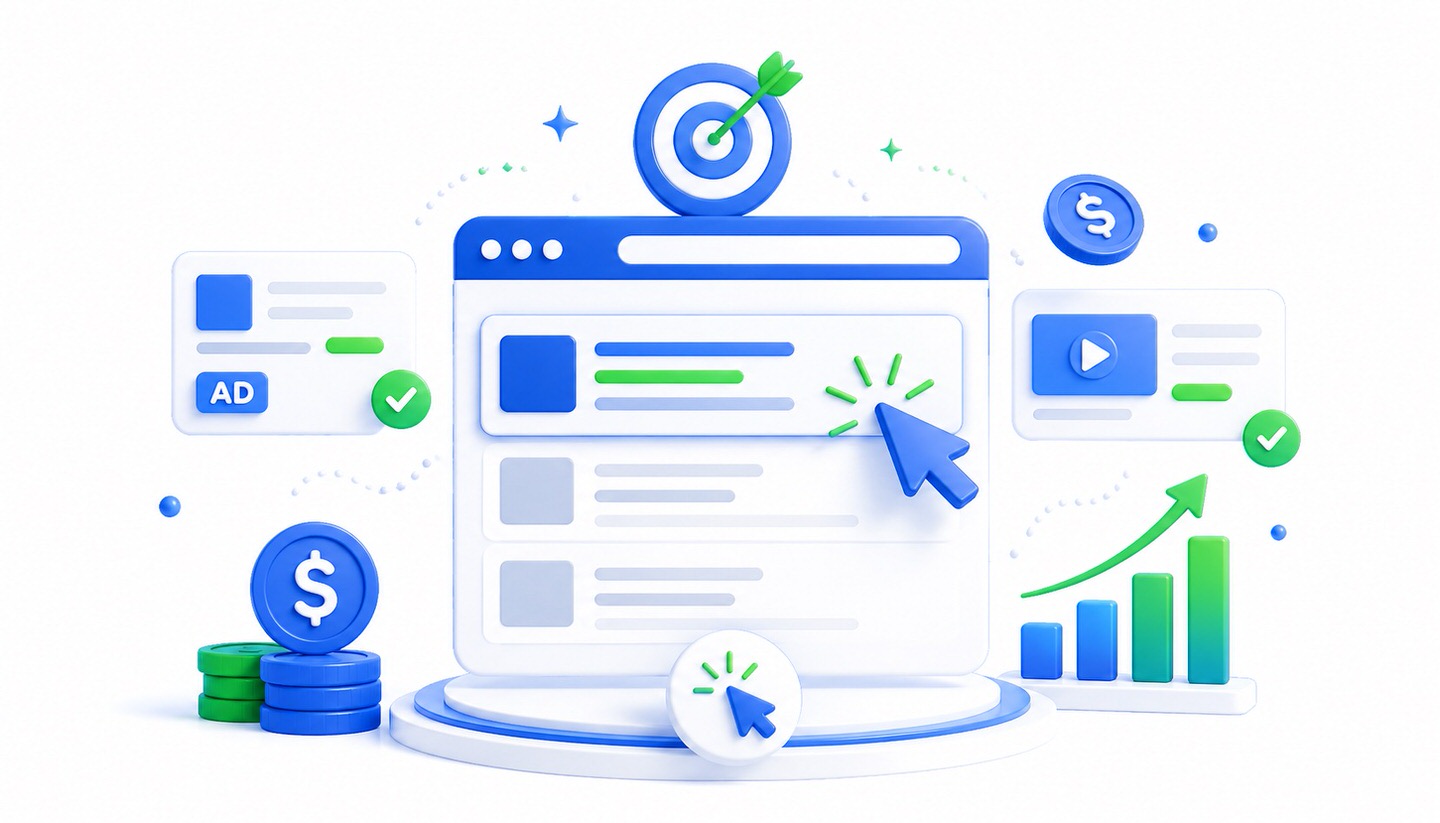
PPC (Pay per Click) is an online advertising model where advertisers pay only for actual clicks on their ads.
What is Pay per Click (PPC)?
Pay per Click (PPC), known in German as "Bezahlung pro Klick" (payment per click), is a billing model in online advertising where the advertiser only pays when a user actually clicks on their ad. The mere display of the ad is free, and costs only arise from the click. This model is one of the most common billing methods in online marketing and forms the basis of most search engine and social media advertising.
The term PPC is often used synonymously with the billing term CPC (Cost per Click). Strictly speaking, PPC describes the advertising model, while CPC refers to the specific price for a single click.
How does PPC work?
PPC advertising typically operates on an auction principle. Advertisers specify which search terms or target audiences their ad should appear for and submit a maximum bid per click. If the ad is displayed and clicked, the corresponding amount is charged.
Important: The highest bidder does not automatically win the best position. With Google Ads, for example, a combination of bid and quality score determines the outcome. The quality score evaluates factors such as the relevance of the ad, the expected click-through rate, and the quality of the landing page. A relevant, well-crafted ad can therefore achieve a better position with a lower bid than a poorer ad with a higher bid.
Where is PPC used?
- Search Engine Advertising (SEA): The classic area of application. Ads on Google Ads or Microsoft Ads appear for relevant search queries above and below the organic results.
- Social Media Ads: Advertisements on platforms such as Meta, LinkedIn, or TikTok, which are also frequently billed per click.
- Display Advertising: Banner ads on websites that can be billed using the PPC model.
PPC in relation to other billing models
PPC is just one of several possible billing models. For context:
- PPC / CPC (per click): Costs arise per click. Ideal when the goal is to attract visitors to the website.
- CPM (per thousand impressions): Costs arise per thousand ad impressions, regardless of clicks. More suitable for reach and brand awareness.
- CPA (per action): Costs only arise when a specific action, such as a purchase, is completed.
PPC is thus a central component of performance marketing, as costs are directly linked to a measurable user response (the click).
Advantages and limitations of PPC
Advantages:
- Cost control: Payment is only made for actual clicks, not just for visibility.
- Quick results: Ads can generate visitors immediately, unlike SEO, which takes time.
- Precise targeting: Budget, target audience, and keywords can be precisely defined and adjusted at any time.
- Full measurability: Every click and subsequent action is traceable.
Limitations:
- Ongoing costs: Visibility ends as soon as the budget runs out.
- Click fraud: In some areas, costs may arise from invalid or malicious clicks, such as those from bots or competitors.
- High competition: In competitive industries, click prices can be very high.
How can PPC be optimized?
- Improve quality score: Relevant ads and matching landing pages reduce click costs and improve ad position.
- Use negative keywords: Exclude irrelevant search queries to avoid wasted spend and unnecessary costs.
- Align landing pages: The landing page must match the ad’s promise, otherwise the expensive click is wasted.
- Continuous testing: Compare different ad variations through A/B testing and improve them continuously.
Conclusion
Pay per Click is a performance-based advertising model where payment is only made for actual clicks. It offers quick results, precise targeting, and full measurability, making it a core component of performance marketing. The key to success lies not in the highest bid, but in relevant ads, a good quality score, and appropriate landing pages. Those who strategically manage and continuously optimize PPC can reliably attract visitors, but should keep in mind that visibility only lasts as long as the budget is available.