Owned Media
Owned Media refers to self-controlled channels such as websites or blogs - the foundation for independent and sustainable online marketing.
What is Owned Media?
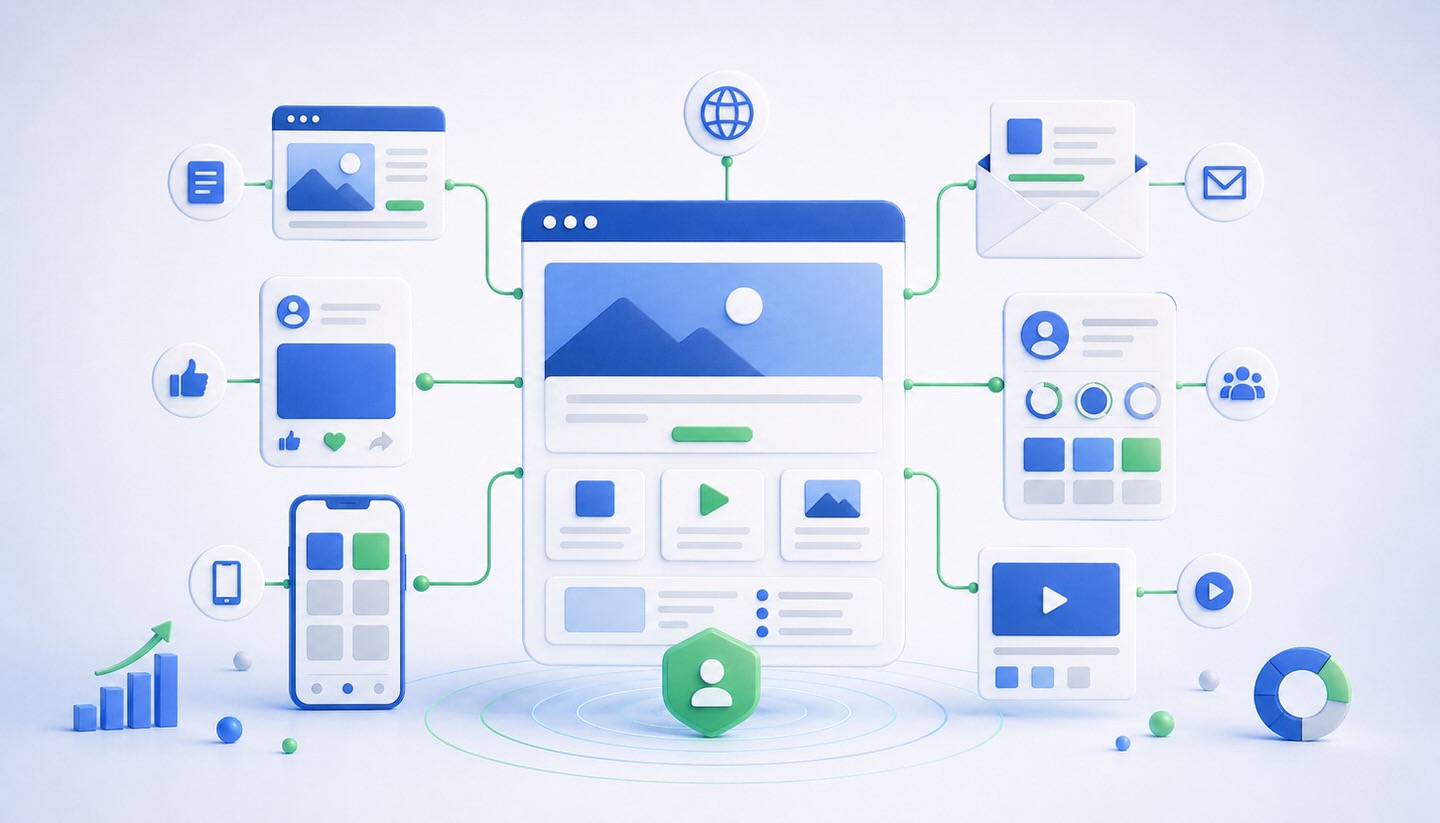
Owned Media (known in German as "eigene Medien") refers to all communication channels that a company owns and fully controls. This includes the company's own website, corporate blog, newsletter, and its own social media profiles. The key point is that the company itself decides which content is published, when, and how, without having to pay for placement or relying on the goodwill of third parties.
Owned Media is one of three central media types in online marketing, alongside Paid Media and Earned Media. Only the interplay of these three results in a complete marketing strategy.
An Overview of the Three Media Types
- Owned Media (owned channels): Channels owned by the company, such as a website, blog, or newsletter. Full control, no placement costs.
- Paid Media (paid channels): Purchased reach, such as through Google Ads, social media advertising, or native advertising. Fast-acting but only effective as long as the budget lasts.
- Earned Media (earned channels): Attention that is earned, such as through press mentions, recommendations, or user shares. Highly credible but only partially controllable.
Simplified: Owned Media is what you own, Paid Media is what you rent, and Earned Media is what you earn.
A Special Consideration for Social Media Profiles
An important note: Social media profiles are considered Owned Media because the company controls the content itself. However, they are actually located on third-party platforms. This means limited control: If a platform changes its algorithm, its rules, or if an account is blocked, the company has no influence over it. The company's own website and newsletter are therefore the only truly fully owned channels, as they exist independently of external platforms.
What Advantages Does Owned Media Offer?
- Full Control: The company decides on content, design, timing, and messaging itself.
- No Placement Costs: Unlike paid advertising, there are no ongoing costs per click or impression.
- Sustainability: Content created once, such as a good blog post, can attract visitors for years.
- Independence: Especially the company's own website is not dependent on external algorithms or platform rules.
- Data Sovereignty: Valuable data about the target audience can be collected and used directly on owned channels.
Owned Media and SEO
The company's own website is the heart of Owned Media and, at the same time, the central stage for search engine optimization. Here, both topics directly intersect: High-quality content on the company's own blog strengthens organic visibility, attracts visitors via search, and can trigger Earned Media in the long term, such as when other websites link to good content (backlinks). Owned Media thus forms the foundation on which SEO can even take effect.
The Interplay of Media Types
Owned Media unfolds its greatest impact in conjunction with the other media types. A typical pattern: A company publishes valuable content on its own website (Owned), promotes it specifically through ads (Paid), and subsequently receives mentions and links from third parties (Earned). The company's own channels serve as the basis because they are the destination to which all other measures ultimately lead.
Conclusion
Owned Media encompasses all channels that a company owns and controls, primarily its own website, blog, and newsletter. These offer full control, independence, and sustainable impact, forming the foundation of every online marketing strategy. It is important to recognize that while social media profiles are included, they operate on third-party platforms. Those who focus on truly owned channels like their website and newsletter and maintain them with high-quality content create an independent and long-term valuable marketing base.