Multichannel Marketing
Multichannel marketing increases reach and customer loyalty through the targeted use of multiple channels - both digital and traditional.
What is Multichannel Marketing?
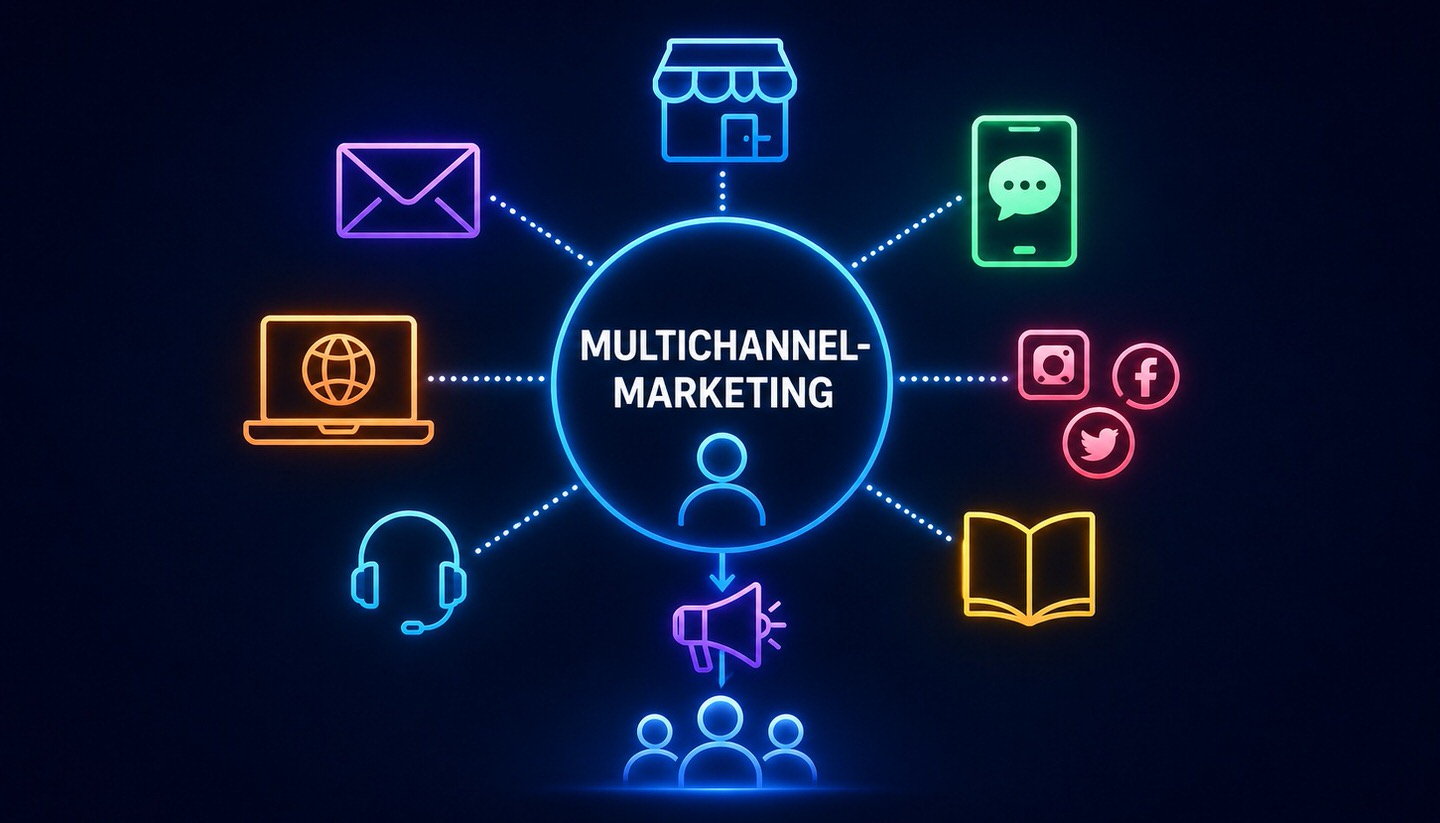
Multichannel marketing refers to a strategy in which a company uses multiple channels simultaneously to reach its target audience, communicate with them, and offer products or services. Instead of relying on a single channel, the company is present at various touchpoints, such as its own website, social networks, email, search, and potentially also in physical stores.
The core idea is simple: customers today move across many different channels. Being present where your target audience is increases reach, creates more touchpoints, and makes it easier for prospects to engage with the company.
Which Channels Are Included?
Multichannel marketing encompasses both digital and traditional channels. Typical examples include:
- Own website and online shop: The central, fully controllable channel (Owned Media).
- Search engines: Visibility through organic search (SEO) and paid ads (SEA).
- Social media: Platforms such as Instagram, LinkedIn, or TikTok.
- Email marketing: Newsletters and automated mailings.
- Online marketplaces: Such as sales platforms where products are additionally offered.
- Traditional channels: Physical stores, print, telephone, or trade fairs.
The Key Difference: Multichannel, Cross-Channel, and Omnichannel
These three terms are often confused but describe different levels of channel integration. Understanding this difference is central to the topic:
- Multichannel: The company uses multiple channels but often operates them largely independently of each other, with each channel functioning on its own. The focus is on the channels.
- Cross-Channel: The channels are interconnected, allowing customers to switch between them. For example, they might research online and purchase in-store, or vice versa.
- Omnichannel: All channels are fully integrated into a seamless overall experience. The customer no longer perceives individual channels but rather a continuous experience. The focus is on the customer, not the channel.
Simply put, this describes an evolutionary stage: Multichannel is the coexistence of many channels, Cross-Channel their interconnection, and Omnichannel their complete fusion into a unified experience.
What Are the Benefits of Multichannel Marketing?
- Greater reach: More channels mean more opportunities to reach the target audience.
- More touchpoints: Customers encounter the brand more frequently, which strengthens trust and recall.
- Customer choice: Each customer can use the channel they prefer.
- Increased stability: Those who are not dependent on a single channel are more resilient, for example, if the organic reach of a platform declines.
The Biggest Challenges
- Maintaining consistency: Across all channels, brand image, messaging, and quality should be uniform. Inconsistent appearances confuse the target audience.
- Coordination and effort: Managing and aligning multiple channels requires resources and planning.
- Separate data silos: If channels are not connected, isolated data pools emerge, making it difficult to gain a comprehensive view of the customer. This is where the shift toward Omnichannel comes into play.
- Attribution: Since customers often interact with a brand across multiple channels, it is challenging to determine which channel ultimately led to the conversion. This question of attribution is also important for measuring success and ROI.
What Matters Most
- Choosing the right channels: Not every channel is suitable for every company. The key is to be present where your target audience actually spends time.
- Consistent messaging: Convey a coherent, recognizable brand image across all channels.
- Connecting channels: Where possible, link channels to make transitions easier for the customer.
- Measuring and evaluating: Track the performance of individual channels to allocate budget and effort effectively.
Conclusion
Multichannel marketing uses multiple channels simultaneously to reach the target audience at various touchpoints—from the company’s own website to search, social media, and traditional channels. This increases reach and stability but also presents challenges, particularly in terms of consistency, coordination, and attributing success. It is important to distinguish this from the Cross-Channel and Omnichannel approaches, which represent increasingly stronger integration of channels, culminating in a seamless overall experience. Multichannel marketing is successful when it doesn’t just use as many channels as possible but instead strategically selects the right channels, maintains a consistent message, and consistently measures their impact.