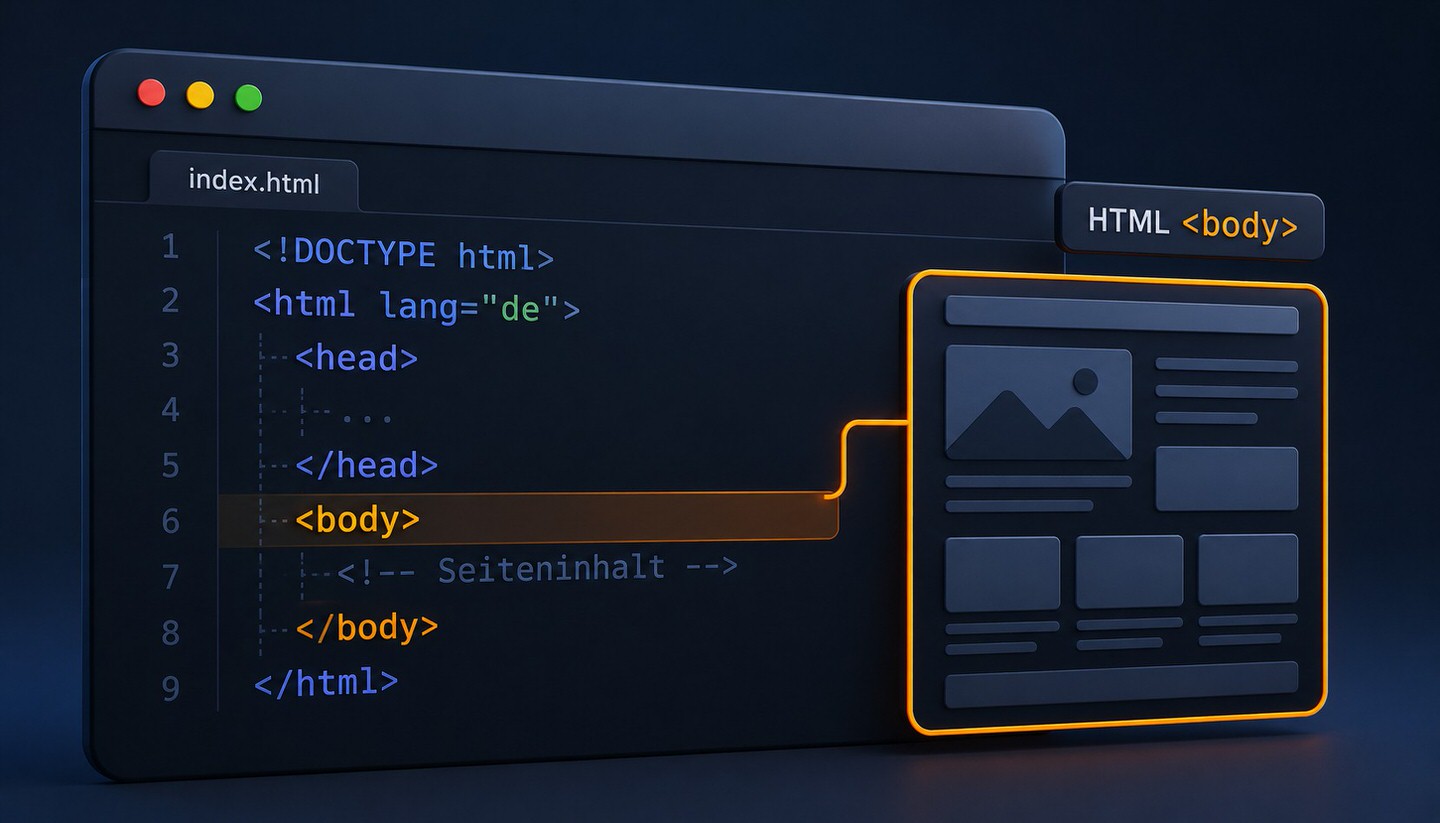
HTML Body
The HTML body contains all visible content of a webpage and is central to SEO, user experience, and semantic structure.
What is the HTML Body?
The Body (written as <body>) is the section of an HTML document that contains all the visible content of a webpage. Everything a visitor sees and interacts with on a page is located within the body tag: texts, headings, images, videos, links, buttons, and forms.
Together with the <head>, the Body forms the basic structure of every HTML page. While the Head contains invisible information such as metadata, the page title, and references to CSS and JavaScript files, the Body is the part that is actually displayed on the screen.
Where is the Body located in the HTML structure?
The Body follows directly after the Head in the document. A simple basic framework looks like this:
<!DOCTYPE html>
<html lang="en">
<head>
  <meta charset="UTF-8">
  <meta name="viewport" content="width=device-width, initial-scale=1.0">
  <title>Example Page</title>
</head>
<body>
  <header>
    <h1>Welcome to our website</h1>
  </header>
  <main>
    <p>Here you will find information about our company.</p>
  </main>
  <footer>
    <p>Contact: info@examplepage.com</p>
  </footer>
</body>
</html>
The Body thus forms the framework in which all visible components of the page are housed.
Semantic Structure in the Body
Modern websites structure the content in the Body using so-called semantic HTML elements. These give the content a clear meaning instead of just using simple <div> containers. The most important ones are:
- <header>: The header area, often containing the logo and main navigation.
- <nav>: Navigation areas with menu links.
- <main>: The central main content of the page, which should appear only once per page.
- <section> and <article>: Thematically related content sections.
- <footer>: The footer area, usually containing contact details, legal notices, and legal links.
This structure not only aids in clarity but also helps search engines and screen readers better understand the layout of a page.
Why is the Body relevant for SEO?
The Body contains the actual content that Google evaluates. A well-thought-out structure in the Body directly impacts search engine optimization:
- Heading hierarchy: There should be exactly one
<h1>per page, which names the main topic. Subtopics are logically structured with<h2>,<h3>, and so on. This hierarchy helps Google understand the content structure. - Meaningful text content: Since search engines read the text in the Body, it should comprehensively and clearly answer users' search queries.
- Alt texts for images: Images in the Body should have an
altattribute that describes the image content. This improves accessibility and findability in image search. - Meaningful link texts: Links in the Body should be descriptive (for example, "our services" instead of "click here").
The Body in Interaction with CSS and JavaScript
The Body provides the content, but the appearance and behavior are controlled by other technologies:
- CSS determines the layout, colors, fonts, and spacing of the elements in the Body. This turns the raw content into an attractively designed page.
- JavaScript makes the content interactive, for example through animations, loading additional content, or responding to clicks. In Single-Page Applications using frameworks like React or Vue, large parts of the Body content are dynamically generated and updated via JavaScript without reloading the page.
Note for WordPress Users
Those who run a website with WordPress or a similar CMS usually do not come into direct contact with the Body tag. The system automatically generates the HTML structure in the background. Nevertheless, a basic understanding is helpful, for example when integrating tracking codes, troubleshooting, or making custom adjustments to the theme.
Conclusion
The Body is the core content of every webpage. A clean, semantically structured layout with a clear heading hierarchy not only improves readability for visitors but also helps search engines correctly classify the content. Thoughtfully structuring your content in the Body creates an important foundation for good rankings and a pleasant user experience.